Covered event structure specialists
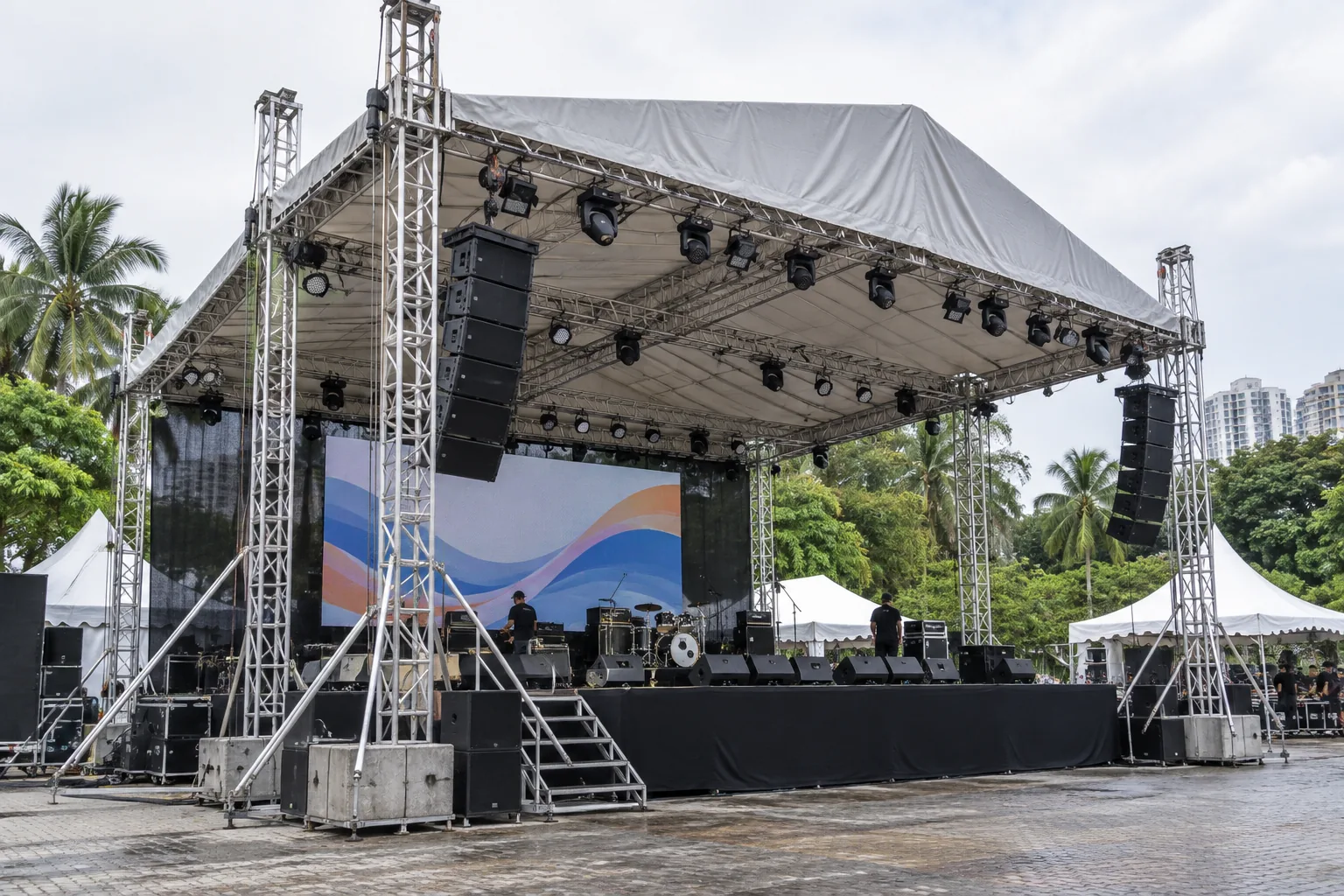
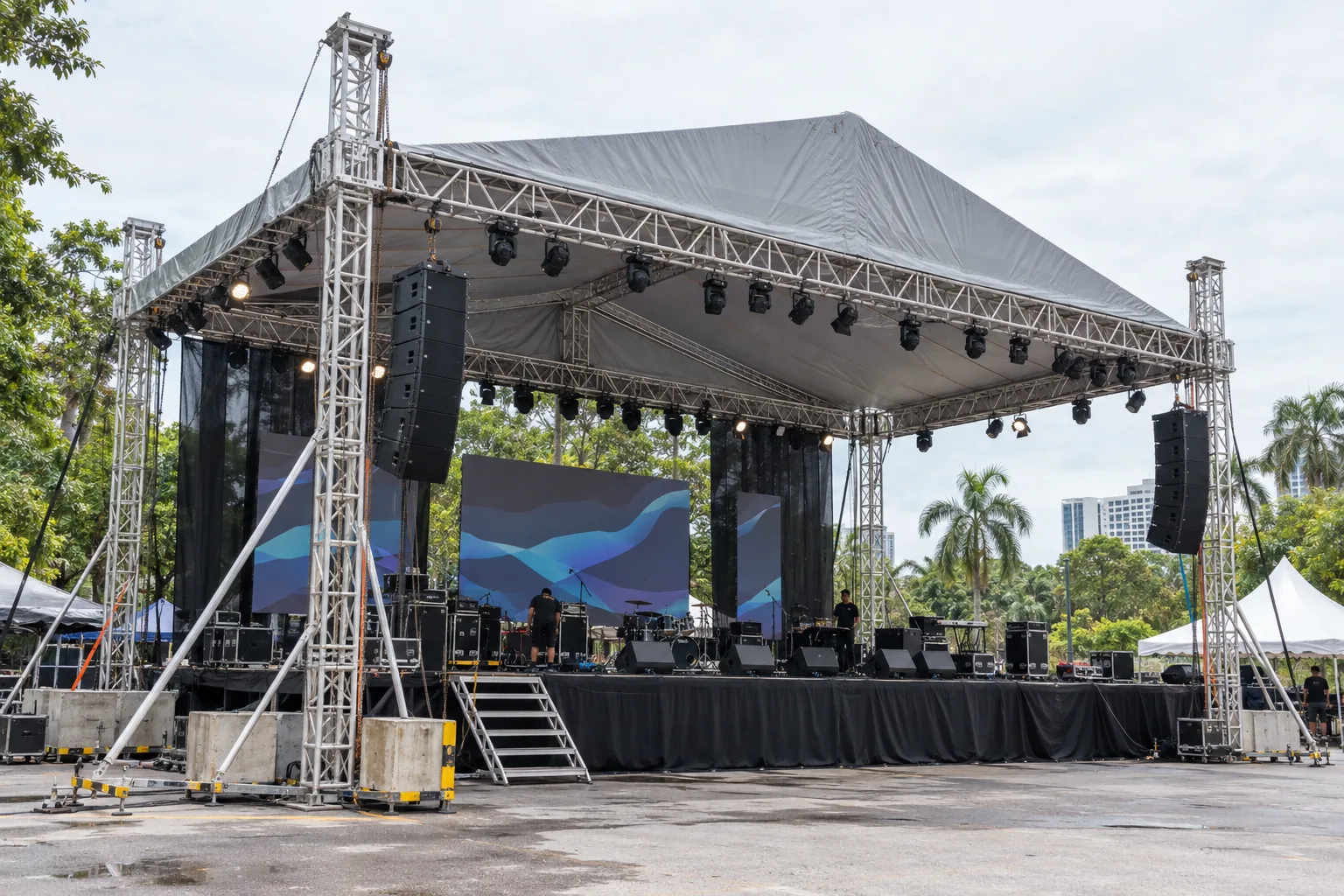
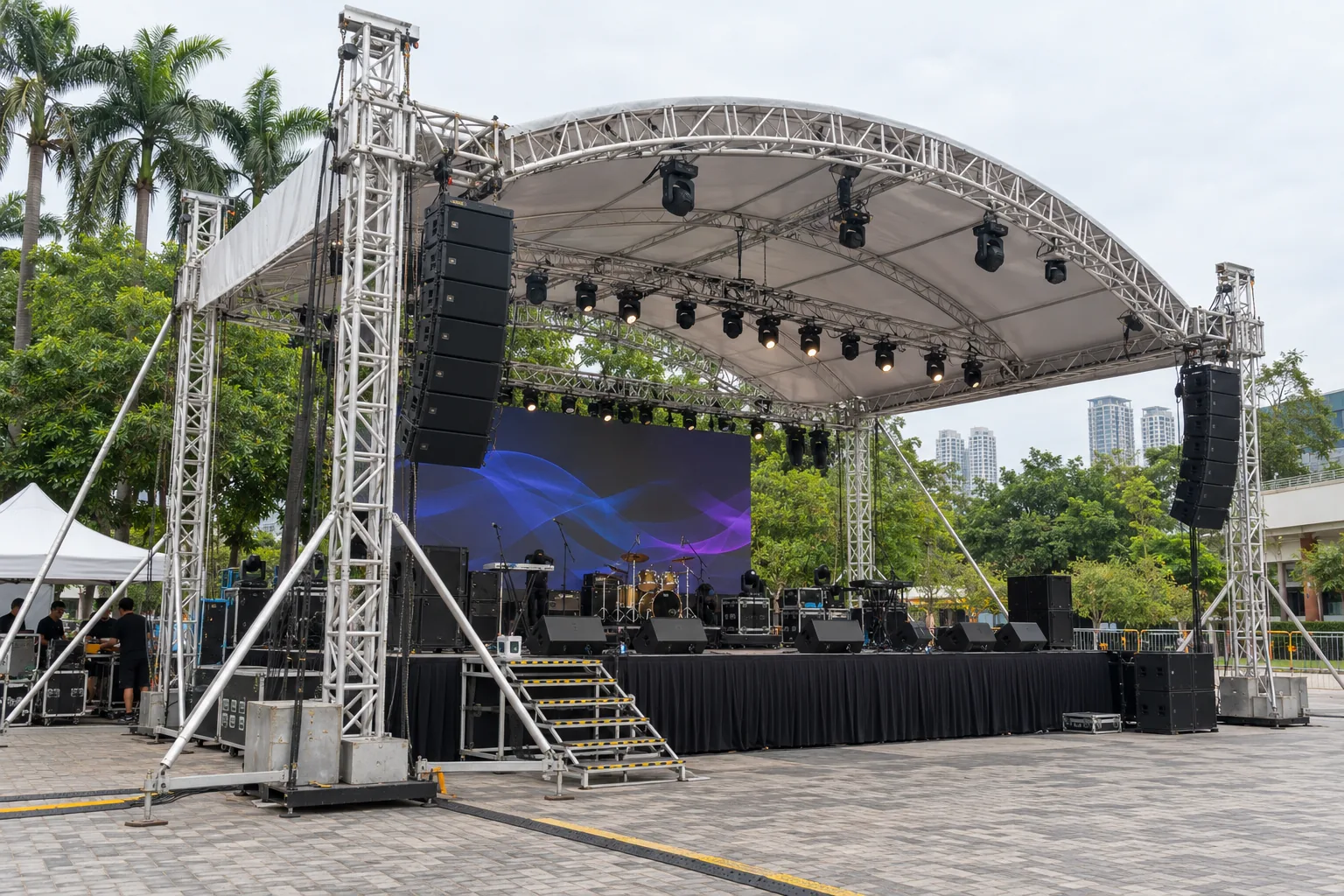
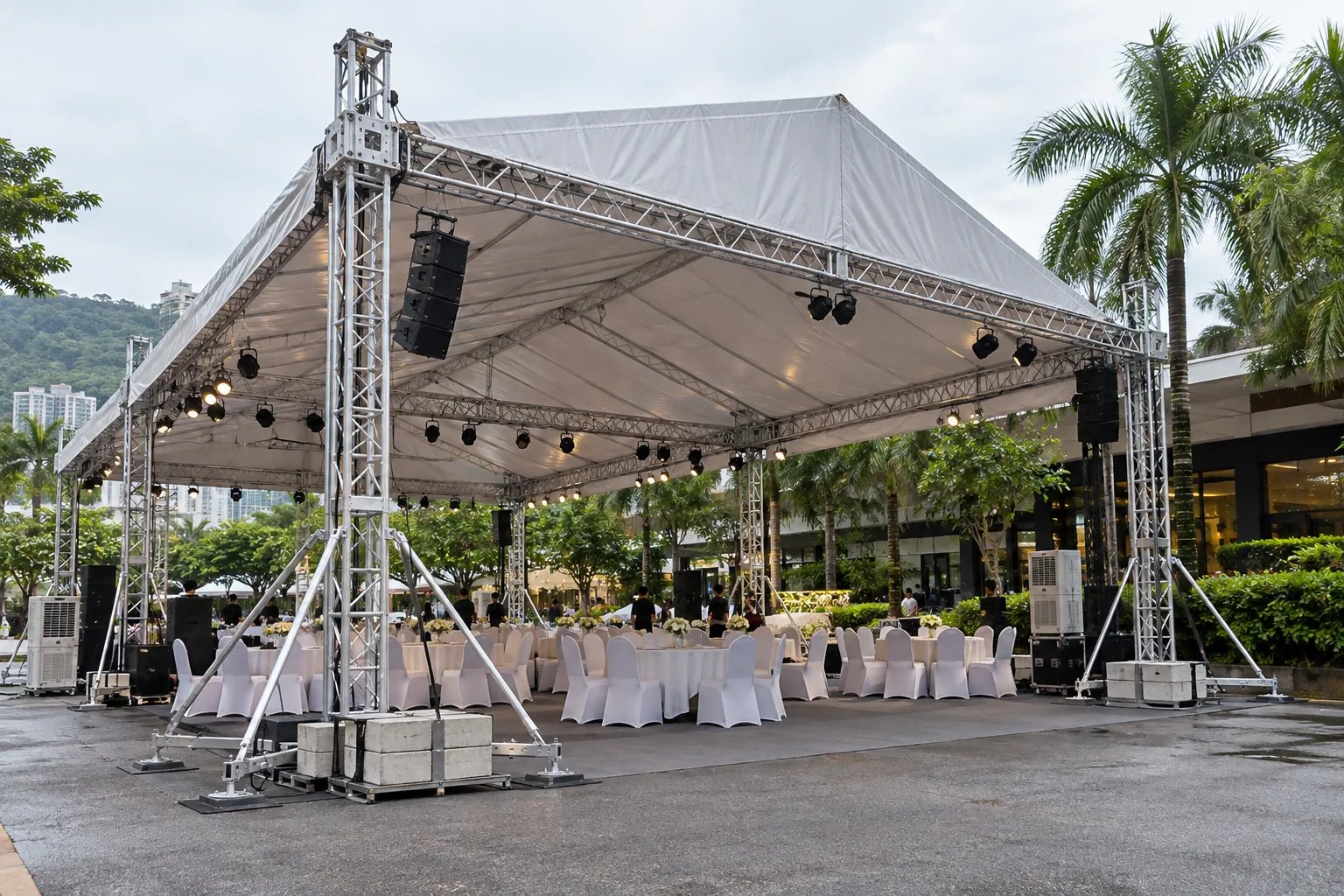
Truss stages, canopies and covered structures.
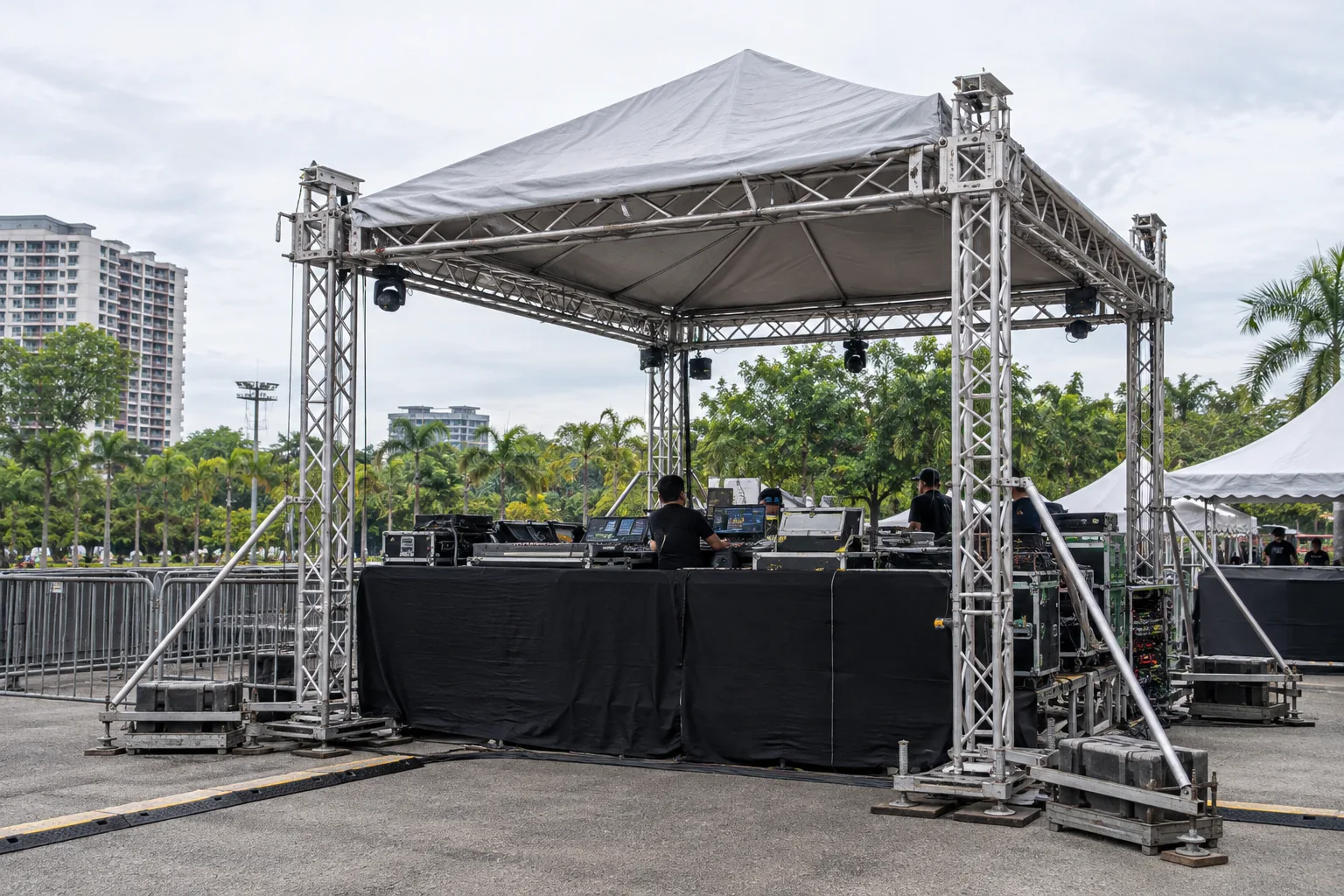
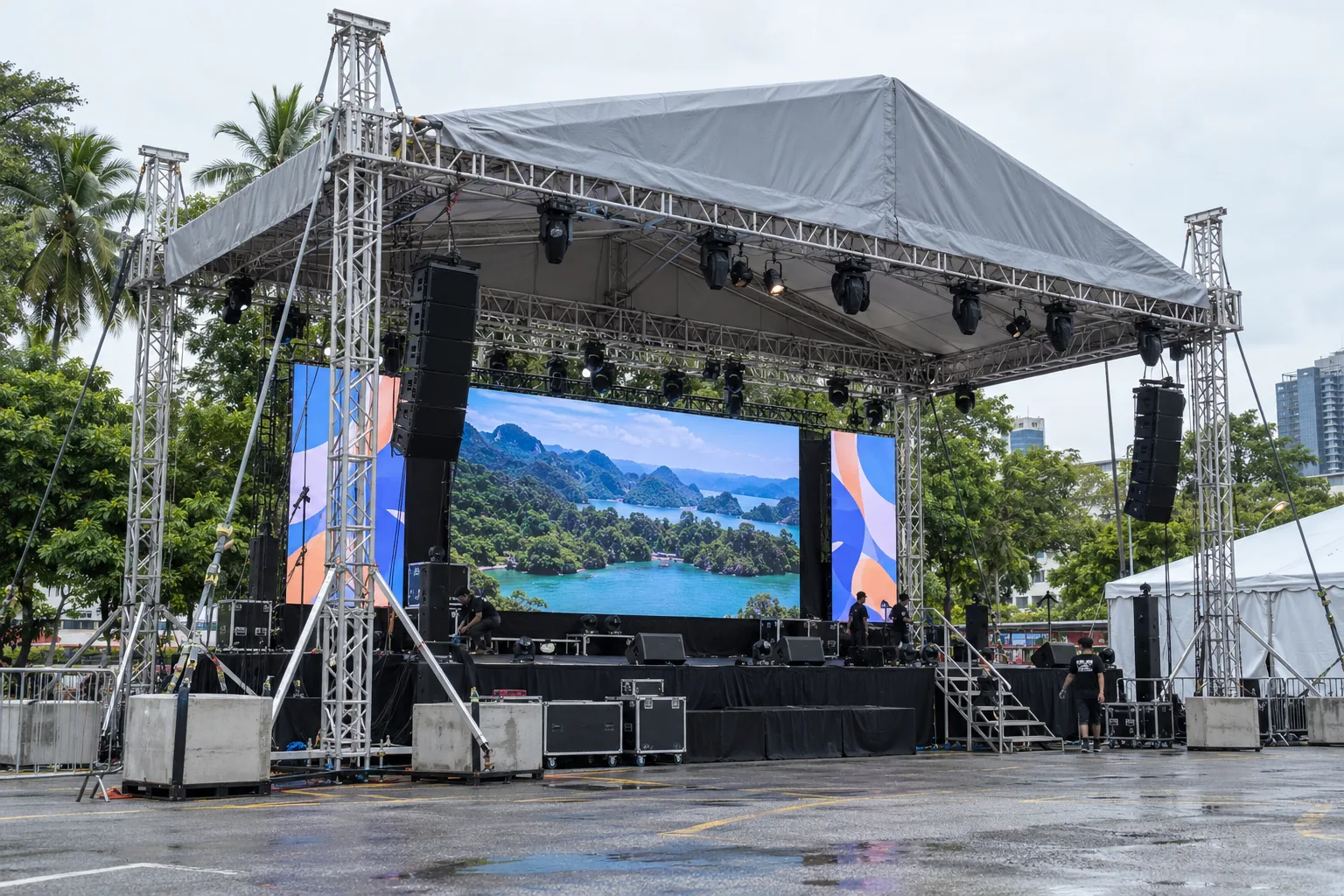
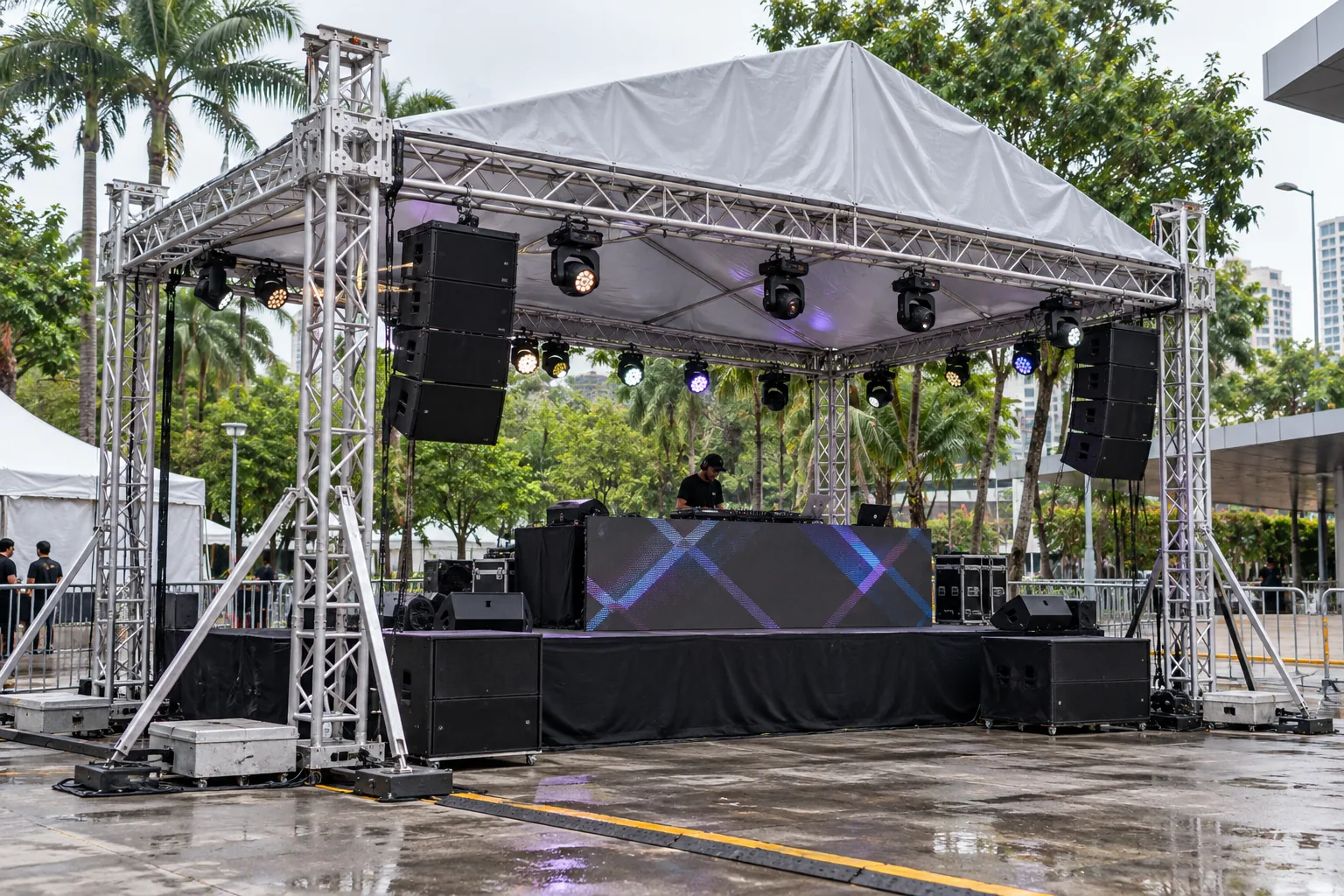
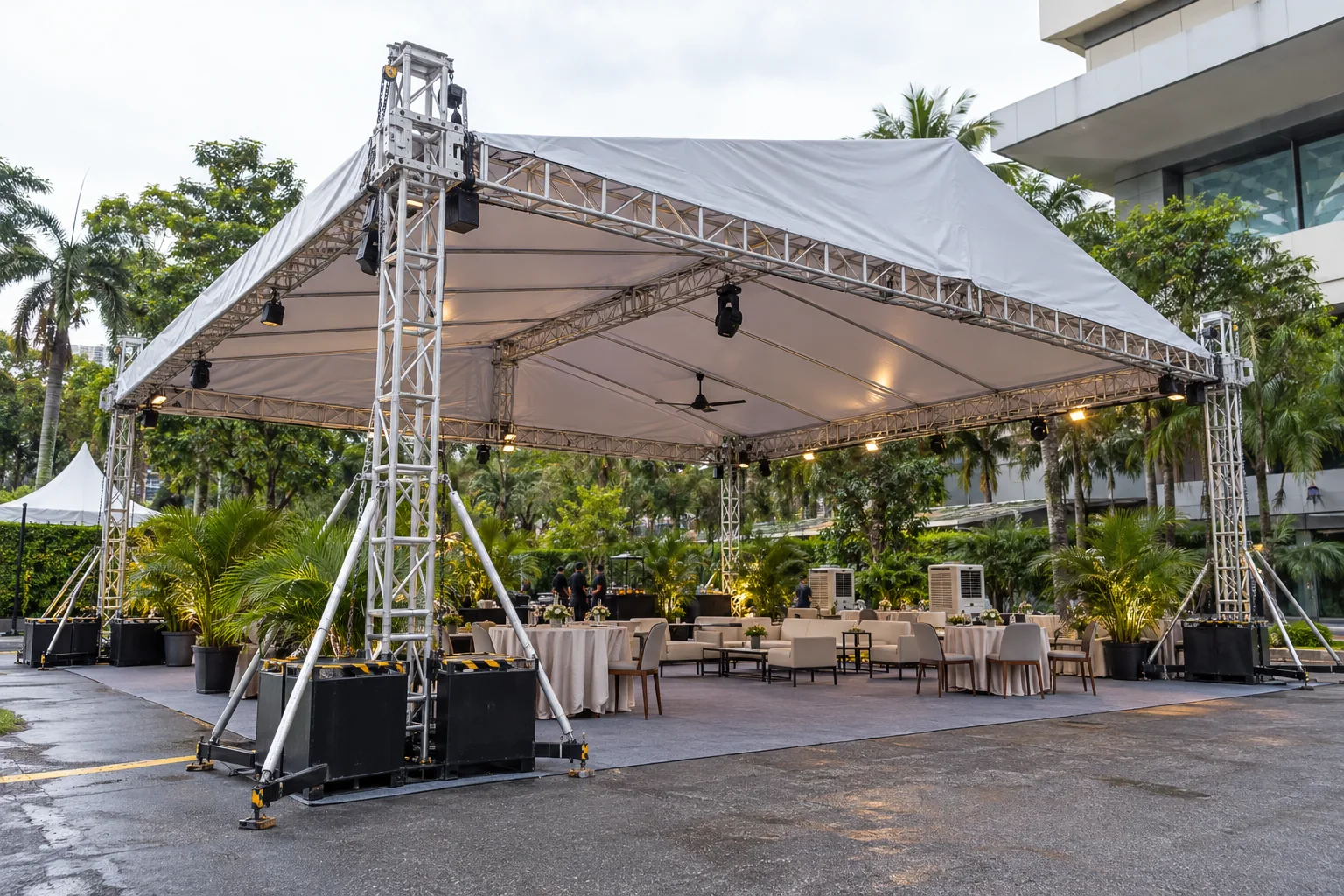
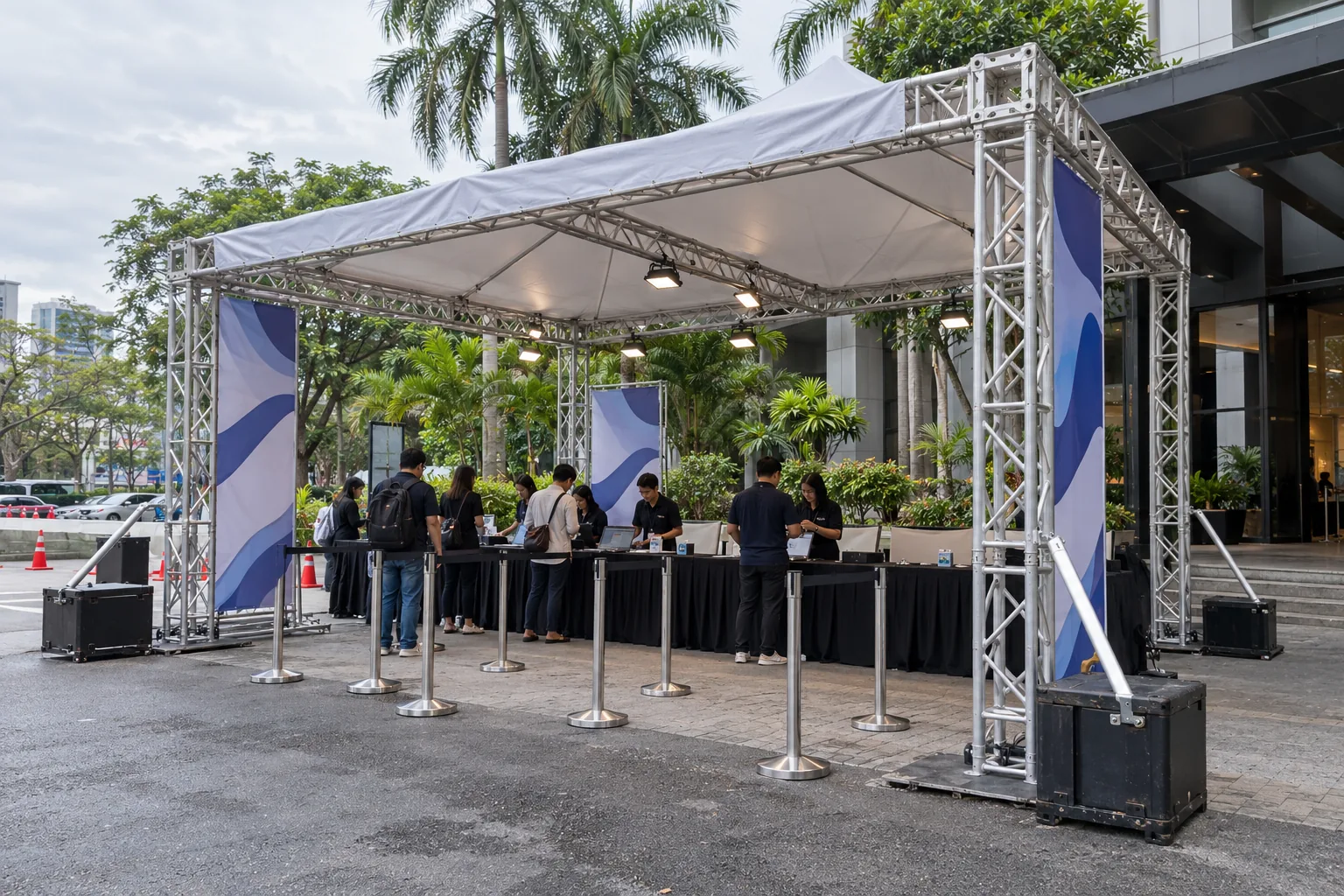
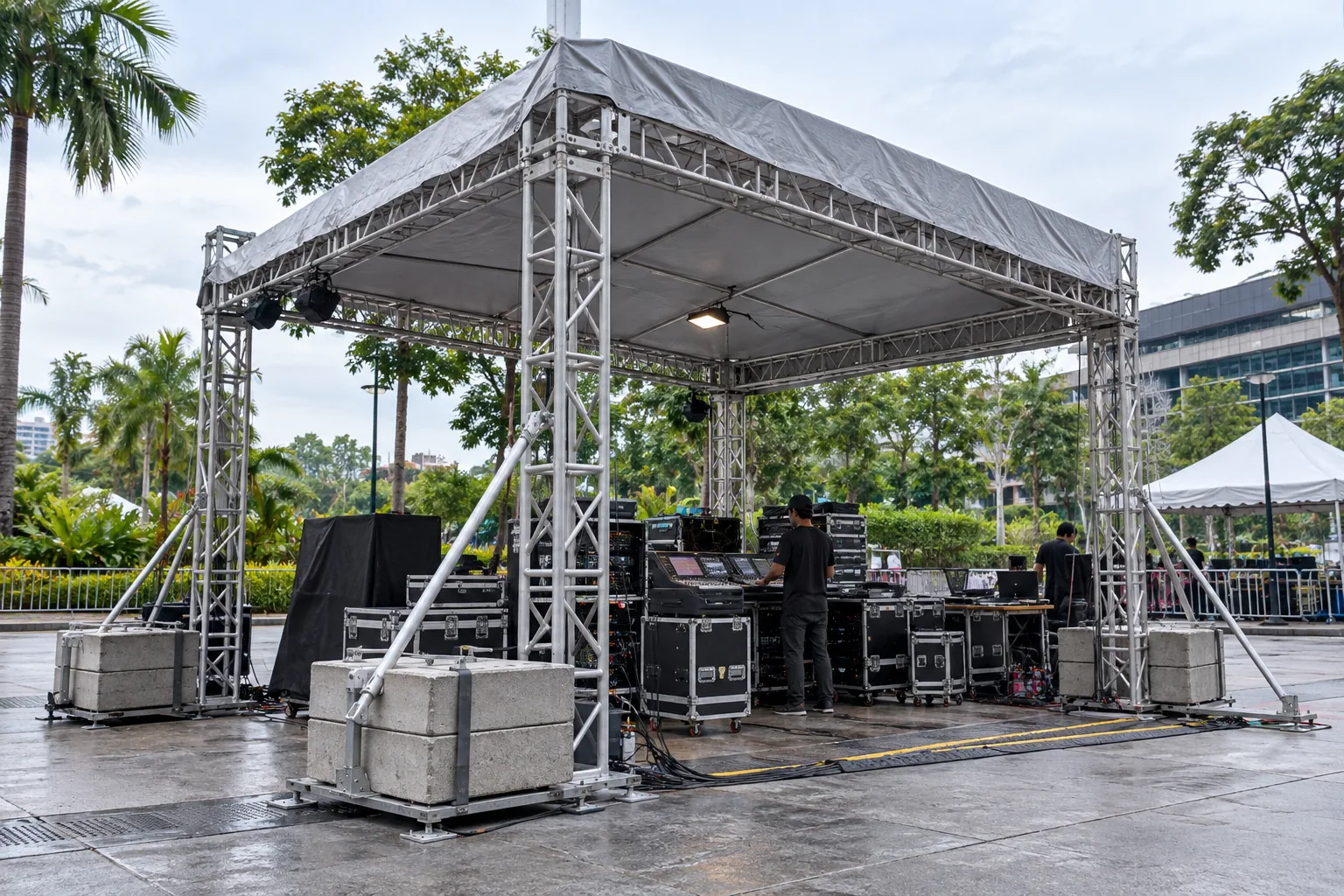
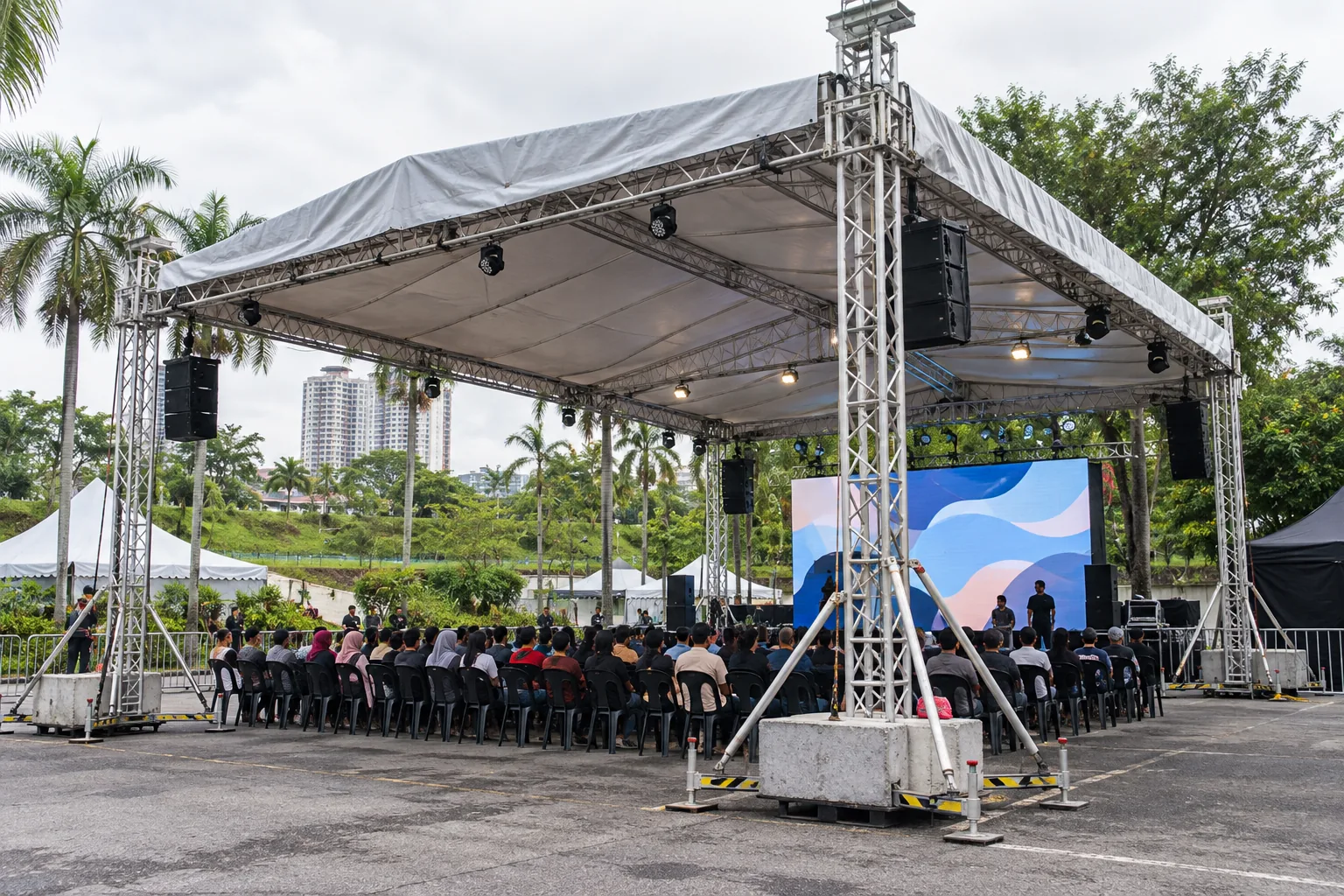
CK supplies and installs truss canopies and covered event structures, including complete stage-and-roof packages, flat, pitched and arched roofs, pavilions, entrance walkways, FOH shelters, LED and DJ canopies, VIP areas, registration cover and technical shelters.
Quotation inputs
A roof needs more than width and length.
01Covered area and clear height
02Stage or equipment beneath
03Roof shape and canopy material
04Every production load and position
05Open, side-covered and rear-covered states
06Ground, slope and underground restrictions
07Ballast, foundation and runoff space
08Vehicle and lifting access
09Weather monitoring and operating limits
10Installation, handover and dismantling times
Covered truss FAQ
Stage, canopy and roof questions.
What is the difference between a truss stage and a stage platform?
The platform is the deck people or equipment stand on. Stage truss creates production positions around or above it. A covered stage adds a complete temporary roof system; the three scopes should be specified separately.
Is a truss canopy the same as a marquee tent?
No. A truss roof is generally a production structure for a stage, technical area, screen or designed pavilion. A marquee or conventional canopy is normally more suitable for broad guest seating, dining or full enclosure.
Can a truss roof support lighting, sound and LED?
A compatible roof system may support specified production loads when the exact equipment, positions and complete arrangement are checked. A website category does not establish capacity.
Can side covers be added when it rains?
Not automatically. Side and rear covers change wind-facing area, ventilation and structure behaviour. Every intended covered state should be included in the original project plan.